Search This Blog

Showing posts with label manufacturing. Show all posts

Monday, 23 May 2016

 
VibraSens, manufacturer of industrial  vibration monitoring instrumentation, announces accelerometers with an M12 connector designed for predictive maintenance vibration monitoring.

Model 101.51: Top exit sensor with M12 connector. Datasheet 
Model 103.02: Side exit sensor with M12 connector. Datasheet
Item Code used for M12 will be Model Number- Frequency Code- Connector type
Example: 101.51-XX-2 for M12 connectors.

About VibraSens
With a wide range of products from industrial piezoelectric accelerometers, vibration sensors, vibration transmitters, signal conditioners to junction boxes, low noise cable assemblies, connectors, accessories and calibration equipment,  VibraSens , an European company, is one of the best designer and manufacturer of Vibration instrumentation with a glorious track record of over a decade especially in harsh and high temperature environment (500°C, 700°C or even more). Our competitive edge lies in the product innovation, competitive price and superior quality. 

A modern production facility exclusively engaged in the design and manufacture of piezoelectric vibration transducers, piezoelectric pressure sensor and vibration instrumentations help us to maintain a high quality level in our core business. Our manufacturing and test equipment ranges from basic precision machinery for providing high quality sensor components, to custom-built machinery specifically designed for piezoelectric vibration sensor fabrication. During the years of development we have also built some specifically design systems to test our range of piezoelectric accelerometer. We have developed using ®Labview (National Instrument Trademark) a completely automated shaker test system to check the sensitivity and frequency response (up to 10 kHz) of our piezoelectric vibration sensors. Our controlled process includes laser and microplasma welding, helium leak tester, resistance welding, temperature cycling, high temperature brazing. All those processes and others are strictly controlled by our process specification document. We closely work with one of the best European company specialized in the manufacturing of hybrid circuit for the sensor industry. With this partnership, we are sure to stay ahead of this technology for the years to come. 

Customer satisfaction is VibraSens’s prime objective. Service and dedication towards customers, has earned the company its distinguished clientele & distributors from various industries such as Power generation (Gas turbine, Steam turbine, Wind turbine, Hydro generator), Petrochemical & Pipeline industry, Metals & Mining, Pulp and paper, Waste water treatment, etc. VibraSens has products to cater all the industrial needs of their clients. 
For more details please visit: http://vibrasens.com/ 

Monday, 16 May 2016

Machine Condition Monitoring Market

Machine health monitoring is a process of supervising the machinery to identify considerable changes that indicates a fault. The use of machine health monitoring system allows timing for maintenance to be scheduled in a manner that prevents the failure of system and thus avoid its consequences. Machine health monitoring system benefits machinery by identifying the fault before it develops into a major failure. The growing importance of asset management and manufacturer’s drive to optimize productivity and increase efficiency of plant is driving the demand for machine health monitoring equipment market.

Additionally, increasing emphasis on asset utilization and the rising need for elimination of possible machine breakdowns which may lead to redundant maintenance costs has led to an increased adoption of this technology. This technique is generally used on rotating equipments and other machinery such as electric motors, pumps, presses and internal combustion engines. Manufacturing processes, such as breweries and oil refineries, employ monitoring systems, to measure critical parameters. This system makes use of sensors for the purpose of monitoring the machines. SCADA (Supervisory Control and Data Acquisition), is used to analyze information and provide data.

This system is used to monitor current and historical performance of equipments. Machine health monitoring facilitates prediction of machine failure which minimizes production losses, by planning corrective activities beforehand. This technique is primarily aimed towards reducing cot and repair time and is considered to be an efficient strategy in the manufacturing industry. Machine health monitoring involves strategic tools which help in decision making processes.

Various products of machine health monitoring systems are corrosion monitoring equipments, thermograph equipments, lubricating oil examination equipments, ultrasound emission equipments and vibration monitoring equipments. These products make use of various components such as spectrometer, corrosion probes, spectrum analyzer, ultrasonic detector, thermal camera and vibration sensor. The rising need for a system to decrease the risk of unforeseen machine failures and implementation of planned preventative maintenance techniques has increased the demand for machine health monitoring system Obtaining a return on investment from the installment of machine health monitoring system, and irregular maintenance cycles which may require certain modifications in existing machinery to fit the new systems are some of the factors that are constraining the growth of the market. Smart sensors development, vibration sensor machinery and development of Internet of Things (IoT) for machine health monitoring are some the current trends in this industry that are likely to drive the market during the forecast period.

Currently, North America accounts for the largest market share. The growth is mainly driven by the technological advancements in the industrial processing which in-turn have increased the adoption of machine health monitoring systems in this region. However, with growing manufacturing bases of the major market players in automotive, semi-conductor and consumer electronics sectors, Asia-Pacific is expected to be the key contributor for the market growth among all the geographic regions in near future

Wednesday, 11 May 2016

A Housing Project in Scotland Launches IoT Pilot Focused on Energy Use, Safety


The project is billed as a "smart neighborhood" technology test and will monitor energy use inside apartments, as well as the buildings' water and safety systems.

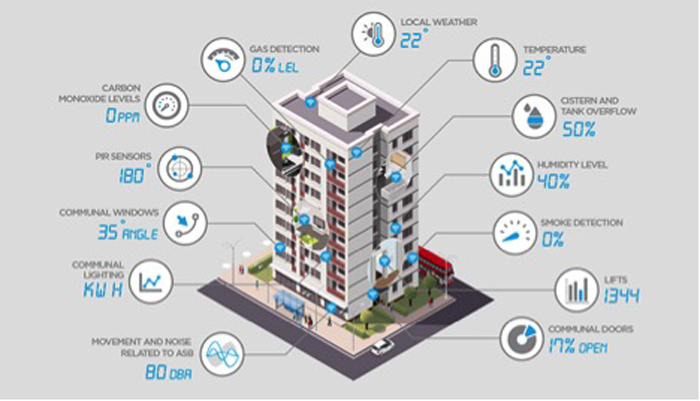
A handful of technology providers teamed with a Scottish housing provider, River Clyde Homes, last month to launch a pilot project for evaluating the use of IoT technology to reduce energy consumption and improve safety at a social housing project that comprises a small neighborhood called Broomhill.
Social housing programs provide homes to residents with low income or disabilities, as well as to the elderly or other individuals who have difficulty finding affordable dwellings. It is similar in some ways to public housing in the United States. Generally, social housing landlords are nonprofit organizations that funnel profits into maintaining existing homes and financing new ones. Social housing complexes are financially regulated by housing authorities, such as the Homes and Communities Agency (HCA) in England and the Scottish Housing Regulator (SHR) in Scotland, and partially financially funded by their respective national governments.

Broomhill, which is made up of 666 units, including townhouses, multi- story apartment buildings and three high-rise buildings, is located in Greenock, a town of 45,000 residents, northwest of Glasgow. River Clyde Homes is hoping the Broomhill IoT pilot project will provide a means for it to more easily monitor the community's energy use and safety systems. If it does, the nonprofit may deploy the technology permanently and expand it to more of the 6,000 properties it manages.

Approximately 300 multi-functional IoT devices that are being installed in both occupied and unoccupied dwellings at Broomhill to monitor a wide range of things are used in this project.

Vibration, temperature and humidity sensors are being installed inside elevators with the goal of helping River Clyde Homes better understand their usage patterns and improve their maintenance in order to avoid breakdowns, since both residents and contractors (who are performing work on unoccupied apartments or communal areas regularly) rely on the elevators. Elevator maintenance is a major cost issue for the landlord.
Temperature sensors are being added to communal water tanks in order to ensure the water is stored at safe temperatures—this is being done in an effort to prevent the growth of Legionella bacteria in the water, says Sharon Fleming, a lead associate consultant for business intelligence software provider HouseMark and the architect of the pilot project. Older people and those with respiratory disorders are especially vulnerable to contacting Legionnaires’ disease, so landlords such as River Clyde Homes are concerned about outbreaks.

Positional sensors on communal fire doors will alert staff if the doors have been left ajar for long periods of time.

Inside an unoccupied building, the sensors are being evaluated for public safety uses. "Unoccupied apartments, particularly in the low-rise dwellings are hot-spots for break-ins, [and they are sometimes used] as a route in to other dwellings," says Fleming. The empty units are sometimes vandalized, as well. Motion sensors and ambient noise sensors are being placed strategically in an unoccupied building at Broomhill and will be combined with video surveillance, says Fleming.

Sensors tracking temperature and humidity inside living units could help River Clyde Homes ensure that residents are not keeping their homes too cool or warm, and at a safe humidity level. Fleming says this information could be used to make sure not only that residents are not wasting energy but also that those with disabilities or respiratory illnesses, and the aged, are in a comfortable and healthy living environment.
High-rise social housing dwellings have restrictors on windows that prevent them from being opened fully, as a safety measure. In the past, children have died after falling out of windows with broken or compromised restrictors. Sensors will be placed on select windows at Broomhill to alert staff if the window is opened farther than a functioning restrictor would allow.

Carbon monoxide sensors with integrated cellular modems will also be tested in the pilot. If they detect dangerous CO levels, River Clyde Homes maintenance staff will receive SMS alerts on their mobile phones. Each detector also runs diagnostic tests each week and triggers alerts via SMS if the device is not functioning properly or its battery is low.

With the exception of the CO sensor, all of the sensor modules contain Sigfox radios. Sigfox is a networking provider that has developed a protocol for transmitting small packets of data over sub-GHz frequencies, on ISM bands (868 MHz in Europe and 902 MHz in the US) using ultra-narrow band (UNB) modulation. The data from the sensors is transmitted to a Sigfox base station, which has been installed on the roof of one of the high-rise blocks in the Broomhill neighborhood. The radios have a range of around 2.5 miles in urban environments. From the base station, the data will be transmitted across the Sigfox network in Greenock, which was deployed through a partnership with British telecommunications firm Arqiva.

IoT platform provider Flexeye is working with HouseMark to deliver the analytics, dashboards, visualization and reporting tools that are being used to collect and manage the sensor data.

Flexeye is also the leader of a consortium of companies developing Hypercat, a specification designed to support interoperability between Internet of Things services and applications. Hypercat has established a common language for resources—using a format called uniform resource identifiers (URI)—that are referenced in multiple systems that may have dissimilar data structures, but which all use the hypertext transfer protocol (HTTP). Hypercat employs the JavaScript Object Notation (JSON) data interchange format and RESTful application programming interfaces (APIs). The data collected through this pilot project will be shared among the stakeholders using the Hypercat format.

Fleming says that all 300 sensors should be installed by the end of this month, and the pilot project will then run for six months, after which River Clyde Homes will decide whether to keep the sensor network deployed or remove it. She adds that if the River Clyde Homes decides to keep the network in place or expand its use to other properties, it will need to work with the technology vendors to establish some sort of payment arrangement, such as a subscription service.

Aside from monitoring the reliability and safety of different physical assets such as elevators, doors and windows, Fleming says that River Clyde Homes hopes the IoT project will enable it "to identify opportunities to improve services for its tenants as well as to reduce costs through proactive maintenance of buildings and equipment." The data may eventually be shared with insurance providers, as well, and be used to negotiate premiums.

Wednesday, 4 May 2016

Where the often quoted ISO 10861-21 falls short for CMS

There is dire need for the system certification of condition monitoring, mostly because current CMS vendors offer at least nine different approaches for basic sensor selection and placement. This confusion originally prompted the call for a certification for owners to assist in the selection of a viable CMS for wind.
After speaking at recently NREL and UVIG events, I was asked if there was a certification for CMS systems in the wind industry. The answer is yes…and no. To investigate further, we will go through the available standards for CMS in wind to find what is helpful.
The standard for vibration in wind turbines is listed as ISO 10816-21. This ISO standard states it “does not apply to diagnostics or fault detection.” It also states that the vibration “evaluation zone boundary values are not intended for use as acceptance values. These must be agreed upon between the manufacturer and user.” So how does the standard help?

To be clear, if you adhere to ISO 10816-21, there is no guarantee you will have a successful CMS program. Also note that the standard applies to a rather wide range of wind turbines, from 200 kw up to 3-MW ratings.
So, what does the standard suggest regarding monitoring? It suggests the use of piezoelectric accelerometers and separates equipment into rotating and non-rotating components.
For rotating components, the standard suggests:
Sensor placement – For rotating components (drive train is a given), it advises the use of sensors in three axis across the drive train. This is not standard for many reasons. Using accelerometers in three axes is not beneficial in determining a failure component. A single sensor can work except when determining some defects. However, as this standard states, its purpose is not intended to measure specific defects.
The main bearing – Three-axis measurements are recommended but not demodulated readings for detecting early bearing defects, nor time waveform measurements. The standard makes no suggestion for the number of lines-of-resolution in the spectrum, averaging, or overlap.
Gearbox – Three-axis measurements again but no demodulated reading for early bearing defect detection nor time waveform measurements. No suggestion for lines-of-resolution in the spectrum, averaging or overlap.
Generator – Three-axis measurements yet no demodulated reading for early bearing defect detection nor time waveform measurements. No suggestion for lines-of-resolution in the spectrum, averaging or overlap.
Number of sensors
It is not practical to use the suggested 17 sensors across the drive train. Typically, most commercial CMS systems use 7 to 8 sensors. Seventeen of them are cost prohibitive. They will also generate too much data. Consider that 7 to 8 sensors installed on 100 towers will produce an annual data volume is in excess of two-million measurements based upon once-a-day intervals.
Using three sensors on a generator bearing to find a bad bearing within is simply not practical. Installation costs go up, data volume increases, hardware costs double, and network load increases as well to get the data out. So this portion of the specification is simply not practical.
On Non-rotating equipment:
Sensor placement – The standard suggests three axes in two locations to monitor the bedplate of the tower for structural purposes. This is more for a process and controls purpose than a condition-monitoring function. Most bedplate monitoring I have been involved with is at a prototype level, certainly not at a fleet level.
Number of sensors – The standard specifies installing eight low-frequency sensors. Again, as with 17 sensors on the drive train, adding eight expensive low frequency sensors is not a good suggestion. It is doubtful that any owner would install eight sensors per tower to understand the vibration of the structure.
Measurement parameters – The standard suggest performing evaluations in 10-minute periods. This really requires specialized equipment. It is certainly not something that is fleet advisable. At 10 minutes per tower, the data volume would be significant, and the data storage and analysis substantial.
Vibration levels – The standard suggests measuring only acceleration and velocity. The accompanying chart (above) shows overall vibration levels in velocity measurement units.
Other standards
ISO 10816-21 standard does not give the end user guidance for acceptable vibration levels, diagnostics, or fault detection. So what can it offer the owner? It does advise as to structural vibration measurements and parameters as well as sensor types and placement. To be clear, not one CMS system commercially available today, marketed and installed, meets this standard.
However, portions of two other suggested standards might be helpful to owners. They are:
• VDI 3832, for rolling element bearing noise and vibration. This also has a wide range of application in wind turbine size. And,
• ISO 13373-2, techniques for bearing and gearbox defects analysis.
So between rotating and non-rotating components, the suggested 25 sensors per tower is literally three times the amount normally installed. Owners show pause at the current eight-accelerometer pricing per tower. Twenty-five is likely not realistic.
Here is what’s missing and crucial to a successful CMS program:
Quality of the sensors – There are at least 10 to 12 sensor factors that are not covered. Cables are not even discussed.
Ability of the software – There are no specifications on measurement parameters, measurement types, resolution, averaging, and a dozen other measurement factors.
Ability of the analyst – There currently are three companies that certify vibration analysts. It certainly makes sense to have an analyst who is certified but this is no guarantee that the person is a good analyst. Ironically, the certifying bodies that teach the theory and background of vibration analysis measurements, teach very little on actual vibration analysis.
We will discuss these important factors in a following article. We will also look at what makes sense for a standard for CMS installs to benefit the owners, ISPs, and manufacturers

Thursday, 14 April 2016

More Companies Turning to Sensors For Supply Chain Visibility

Sensors are proving to be one of the most widely adopted emerging technologies impacting supply chains today. The sensors provide data on the location and the condition of a company’s supplies and products as they are transported around the globe. Jim Hayden, vice president of solutions at Savi Technologies, a sensor analytics company, said sensors allow companies to gain end-to-end visibility of their supply chains. It’s a benefit more organizations are taking note of and continuing to drive adoption rates up.
A recent Deloitte and MHI report identified sensors and automatic identification as a top technology creating the “always-on” supply chain. Sensors are used by 44% of supply chain organizations, according to a survey of 900 supply chain industry leaders. The adoption rate falls just behind cloud computing and storage, used by 45% of organizations. A large number of organizations plan to implement sensors into their supply chains in the future, too. Eighty-seven percent of survey respondents said they plan to use the technology in the next six to 10 years.
In 2013, about 20 million sensors were estimated to be in use in supply chains. In 2022, that number is expected to grow to 1 trillion, and by 2030, the Deloitte and MHI report projects 10 trillion sensors to be deployed.

What’s Driving Adoption?
Hayden said companies have historically relied on “milestone” information of their shipments — these are general notifications that inform a company their container departed or arrived at a certain port within the last day or two, for instance. But as supply chain risks grow and companies look to gain competitive advantages, more are realizing they need to do better than capture “milestone” data. Sensors can provide arrival times within hours, instead of a day or two, Hayden said.
Savi provides both sensors and the data analytics solutions that give companies visibility into their supply chains. Hayden said companies come to Savi to tackle risk and supply chain security as well as to improve supply chain performance. On the risk and security side, Hayden said sensor technology can alert a company if their goods have been tampered with during shipment or was the victim of cargo theft, for instance. Some companies, say those in the food or pharmaceutical industries, also want to be alerted to changes in temperature and humidity as those factors can cause damage their products. Sensors are able to alert companies to these changes via text message, email or through an app on mobile devices, Hayden said, giving them time respond and prevent waste. The goal is for companies to know as soon as possible if something has happened or is likely to happen to their shipments, he said.

Barriers to Adoption
While the benefits of sensors and the data they generate may be clear, Hayden said there are still some barriers to broader adoption of the technology. Many see deploying sensors as a part of risk management, which can be tough to demonstrate clear and quick ROI on. Companies still see the technology like insurance, Hayden said. It isn’t until a company experiences a supply chain disruption or negative event that they realize they need to manage their risks.
Cost is another barrier to adoption. The Deloitte and MHI report said companies are concerned with the cost of deploying sensors as well as the costs associated with the maintenance of networks and storage space required to collect and communicate the data the sensors generate. Additional investment in analytical tools to make sense of the sensor data, too, is needed.
However, the cost of sensors has already fallen over the years. The price of an accelerometer, which can sense acceleration, shock and vibration, has declined 80% since 2006, according to the Deloitte and MHI report.
“The price of moving data across networks and of securing storage space has also plummeted and there is little reason to think the costs of technology will not continue to decline,” the report said.

Early Adopters
Hayden said Savi Technologies’ customers are generally viewed as the “early adopters” of sensor technology and data analytics. However, these “innovators” are realizing they need this technology in their supply chains to keep a maintain a leg up on the competition.
“Even if there is not a real empirical return on investment, they know in their gut it’s the right thing to do,” he said.

Source: https://spendmatters.com/2016/04/13/more-companies-turning-to-supply-chain-sensors-for-end-to-end-visibility/

Tuesday, 12 April 2016

Vibration sensor market projected to hold automotive industry as the fastest growing segment till 2020 according to market forecasts

According to the report “Vibration Sensor Market Analysis: By Technology (Capacitance, Piezo-resistive, Strain Gauge) By Material (Ceramics, Quartz, Silicon) By Industry (Automotive, Nuclear, Consumer Electronics, Machine & Structural Monitoring, Mining) Forecast - (2015 - 2020)”, published by IndustryARC, the Vibration Sensor Market in automotive industry to reach $881.3 million by 2020

The Vibration Sensor Market has witnessed significant deployment rate in the past few years majorly in automotive and aerospace industry. The vibration sensors in automobiles perform real time monitoring of the automobile mechanical systems in order to prevent breakdown and intimate the drivers beforehand.

The vibration sensor market in automotive industry is projected to attain market worth of $881.3m by 2020 as per the IndustryARC analysis. The recent advancements in the automobile systems such as driver assistance systems, commercial telematics solutions have embraced the sensor technology at an extensive level and have perforated high ends market of the automotive industry. OEMs are constantly making efforts to make these technologies accessible to a larger customer base rather than serving the niche segment.

The awareness among the end users has remarkably increased and is acknowledging the offered technology. Europe and North America are the dominant regions in the vibration sensors market owing to the presence of leading end user industries in nations such as The U.S.A, Canada, Germany, and the U.K.

Maintenance and Safety of the equipment has always been the prime objective of the manufacturing industry. A number of solutions has been developed integrating electronics into the mechanical components to improve the operational efficiency and minimize the complexity of the process.

Vibration sensors help to analyze the frequency and intensity of vibrations in order to take decisions regarding performance, production and quality of the object in various industries. These sensors are extensively used to determine the specific cause and location of machinery problems.

Vibration sensors are capable of measuring and analyzing displacement, linear velocity, and acceleration. These sensors primarily facilitate measurements of vibration displacement, velocity and acceleration.

With the development of computer technology, electronic technology and manufacturing process, a variety of vibration sensors have drawn attention and importance in various industry verticals. With the shift towards intelligent or automatic monitoring of machinery in manufacturing plants, vibration sensors market is estimated to benefit hugely and grow significantly in coming years.

Apart from automotive, vibration sensor has revealed promising applications for equipment maintenance in non-destructive testing, nuclear, oil & gas industry. Nuclear power plants majorly depend upon vibration monitoring systems for ensuring continuous power generation and safety of personnel and equipment.

Nuclear reactor outage costs are very high and thus unexpected downtime may lead to enormous losses to the company. Thus approximately 90% of the operation cost is utilized for the monitoring of machinery health using equipment such as vibration sensors.

In Oil & Gas industry, the vibration sensor market is speculated to register double digit CAGR by 2020. Vibration monitoring systems are highly effective in determining machinery health, planning maintenance intervals, reducing downtime and avoiding catastrophic loss.

Sensors offering hazardous area approvals are widely used on gas and oil well heads, supply lines, natural gas power engines, multi-stage gas compressors and other machinery operating in hazardous environments.

Source: http://industryarc.com/Report/165/Vibration-Sensors-Market-Forecast.html 

Thursday, 31 March 2016

Vibration sensor helps analyze sense of touch

Type an email on your computer. Raise a glass to your lips. Feel for the light switch in a dark room. Simple, everyday tasks can demand subtle interactions between our hands and our surroundings, but, surprisingly, much remains unknown about the mechanics of the sense of touch.
"Most people don't have a very clear picture of how touch sensation actually arises," said UC Santa Barbara faculty member Yon Visell, an assistant professor in the Department of Electrical and Computer Engineering and in the campus's Media Arts and Technology graduate program. While people are familiar with touch as consisting of the interaction between two surfaces -- the skin and whatever it is in contact with -- they are less aware of the subtle ways that touch sensing helps us to identify and navigate our surroundings, he said.
For instance, if your fingers are numb, you may still be able to move them, but be hesitant to pick up an object or send a text message, because of the lack of sensation -- think of what happens when your foot or arm falls asleep. According to a study co-authored by Visell that appears in the Proceedings in the National Academy of Sciences, our hands in particular have access to rich tactile information that travels far beyond the tips of our fingers. This may help to explain some remarkable capabilities of the sense of touch -- why, for example, people whose fingers have been anesthetized are still able to feel fine surface detail, as has been demonstrated in prior research.
"The way they seem to be able to do this is by using mechanical signals, or vibrations, that travel beyond the fingers, farther up the arm," said Visell. "The hand has specialized sensory end organs distributed widely in it that can capture such mechanical vibrations at a distance."
Their study used a specialized array of tiny accelerometers, or vibration sensors, worn on the sides and backs of the fingers and hands. With this device, the researchers were able, for the first time, to capture, catalog and analyze patterns of vibration in the skin of the whole hand that were produced during active touch. Actions such as tapping and sliding one or several fingers over different types of material, as well grasping, gripping and indirect tapping (using an object to tap on a surface) all gave rise to distinctive vibration signatures. "We can liken this to the different ways that a bell will sound if it is struck by a metal hammer or a rubber mallet," said Visell.
"How do those signals reflect what it is that we're doing and what it is we're touching? Do parts of the hand nearer to the wrist receive significant information about the shape of the object that we're touching, what it's composed of, or how we're touching it? How are different parts of the hand involved in touch sensing?" Visell said of the fundamental questions that motivated his group to pursue this research. "It is possible that the hand, like the ear, is able to use vibrations produced through contact in order to infer what is being touched, and how the hand is touching it."
According to the study, the vibrations generated through touch, and the distribution of vibrations in the hand, depend very closely on the type of action and the object being manipulated. For instance, vibration patterns produced by tapping a single finger were stronger than those made by grasping, gripping or sliding, but were much more localized in the finger. The patterns of vibration throughout the skin of the hand also varied according to the number of fingers used, the object being manipulated and the action being performed. Tapping the index and middle finger alone was sufficient to elicit vibrations that covered most of the surface of the hand. Even the size of the object being grasped - for example, whether a glass was small or large -- influenced the vibrations that were felt by the hand.
The applications for the information gained in this study are many. They may contribute not only to the foundations of our understanding of touch, but also contribute to fields such as virtual reality by enabling wearable technologies that allow the user to feel if he or she is picking up a feather or a brick while visiting a virtual world. This work may also enable robots to touch and interact more effectively within changing and uncertain environments, and allow future generations of prosthetic hands to provide their wearers with more natural touch feedback, enabling a greater range of functionality to be restored.

Tuesday, 15 March 2016

PIEZOELECTRIC SMART MATERIALS GLOBAL MARKET2016-2020

A new report has been added by wiseguyreports in its research database. This market research study segments the global piezoelectric smart materials market by type (ceramics, polymers, and composites), by application (motors, transducers, sensors, and building materials), and by end-users (transportation, healthcare, leisure and sports, construction and infrastructure, and agriculture and food). This report also segments the industry by geography (the Americas, APAC, and EMEA). The key vendors identified in the market are AAC Technologies, Advanced Cerametrics, Arkema, KYOCERA, and Solvay.

Outlook of the piezoelectric smart materials market

Smart materials are special building materials whose properties change when subjected to external stimuli such as stress, temperature, moisture, pH, or magnetic field.  Piezoelectric materials are a class of smart materials that produce a voltage when mechanical stress is applied. These materials are widely used in sensors and help in measuring fluid density, the force of impact, and fluid composition. Technavio’s market research analysts have estimated the global piezoelectric smart materials market to grow at an impressive CAGR of close to 13% over the forecast period. The increasing demand for piezoelectric smart materials from the military and aerospace sector is expected to drive the market for piezoelectric smart materials globally. These materials help in controlling the airflow across the wings of an aircraft and maintaining it during take-off and landing. Furthermore, these materials are also used to solve common problems with the aircraft, such as engine vibration, high cabin noise levels, ice formation on wings, flow separation due to turbulence, and control surfaces in cold climatic conditions. Also, piezoelectric materials find extensive applications in military and defense sector like smart sensors, smart nanorobotics, smart combat suits, and smart skins. Therefore, the numerous applications of piezoelectric smart materials in military and aerospace industry will spur the growth of this market until the end of 2020.

In this market research study, analysts have estimated factors like the increasing applications of piezoelectric materials in nanotechnology to impel the prospects for market growth until the end of the forecast period. For example, piezoelectric smart materials are used in the manufacture of smart nanofibers that are used in light-emitting transistors and advanced organic solar cells. The recent advancements in the nanotechnology sector will, in turn, bolster this market’s growth potential during the forecast period.

Segmentation by application and analysis of the piezoelectric smart materials market

  • Motors
  • Transducers
  • Sensors
  • Building materials


During 2015, the automobile motors industry dominated the piezoelectric smart materials market with a market share of more than 60%. Factors such as rapid growth in the automobile industry will translate into the demand for piezoelectric materials during the forecast period.

Geographical segmentation of the piezoelectric smart materials market

  • Americas
  • APAC
  • EMEA


In this market study report, the analysts have estimated the Americas to be the largest market for piezoelectric smart materials during the forecast period. The increasing demand for MEMS sensors, used in airbags and anti-lock braking systems, will translate into the demand for piezoelectric smart materials in the Americas. The market for piezoelectric smart materials will account for a market share of more than 47% until the end of 2020.

Complete report in detailed: https://www.wiseguyreports.com/reports/global-piezoelectric-smart-materials-market2016-2020

Tuesday, 5 January 2016

India to develop its FIRST anti-tank mine

Instead of procuring from US or Israel, country's defense forces will soon be self-reliant with the first indigenous off-route or anti-tank mines. These are improvised explosive devices (IEDs), which explode like a projectile while camouflaged and placed on a tripod stand.

The mine, unlike conventional mines, is not buried underground and needs no pressure when placed underneath a vehicle for activation. To be developed by the Terminal Ballistic Research Laboratory (TBRL), a Defense Research and Development Organization (DRDO) laboratory in Chandigarh, and the Central Scientific Instruments Organisation (CSIO), the mine is used in surfaces where underground burial is not possible. The project began six months ago and was reviewed by DRDO experts early this week. It is expected to be completed in another four years.

The incoming target combat vehicle shall be detected using seismic and acoustics sensors, which shall be made by the CSIO. The sensors fitted in these mines can detect seismic vibrations produced when vehicles such as tanks head towards ambush area. When acoustic and seismic sensors detect approach of a suitable target, the infra-red sensors (IR) in it are also activated. These IR sensors can send images of the target for attack. Consequently, after the target is confirmed, all these sensors trigger the warhead of the mine to project towards the target as it comes before it.

The TBRL plans to have a smart mine trap using these anti-tank mines. "Until the target does not approach, the off route mines can be kept on sleep mode, which can conserve the battery required for its operation," said Manjit Singh, director TBRL. He said, "We are working with CSIO on production of special seismic sensors, which can detect the potential target approaching us and also give a wake-up call to the operator as soon as the target approaches."

The anti-tank mine is portable and suitable for both offensive and defensive operations. The range of the off-route mine is 2 to 97 meters. The collaborators are working towards enhancing the range. The CSIO already has special sensors, being used in Delhi metro, to provide advanced earthquake warning system. "These sensors shall be improvised and worked upon for defense application," said CSIO director R K Sinha.

How it works

  • The off-route mine is placed in the range 2-97 m from the target on a tripod stand
  • It does not require any pressure of a vehicle for explosion
  • These mines cannot be detected easily
  • Its acoustic vibration (seismic) and infra-red sensors are triggered when a combat vehicle nears the trap, the mine is activated and shoots off a projectile.

Sunday, 29 November 2015

Detecting and measuring with VibraSens

As a company we saw many opportunities coming across from different regions of the world such as UK/Europe, US/Canada, and Asia. We today as a company involved in manufacturing of vibration sensors, BNC & switches, Cables, Assemblies and other condition monitoring instrumentation looking for potential distributors or authorize channel partners to handle the day-to-day service needs of our customers  

VibraSens is serving the automation industry for more than 10 years and each of our monitoring products hold its own successful sales records. Not only do we offer superior vibration instrumentation, but we also offer the kind of solid expertise and support that should be expected from a manufacturer.

We welcome new representatives to our family and are always looking for the qualified partners expertise in vibration monitoring and calibration services in countries where VibraSens products/distributors/service providers are not available yet. For more details mail us at sales@vibrasens.com 

Monday, 16 November 2015

US Air Force to use vibration sensors to detect vehicles in anti-access and denied areas.

Air Force Research Laboratory at Wright-Patterson Air Force Base, Ohio, announced an
upcoming program this week for Vibrometry Interrogation for Battlefield Exploitation
(VIBE). The objective of VIBE is to develop combat identification (CID) automatic
target recognition (ATR) for vibrometry sensor data for use within anti-access/area
denial (A2/AD) environments.

Vibrometry sensors utilize the principal of micro-Doppler measurements between the
sensor and target caused by surface deflections. These deflections are due to vibrations mainly caused by mechanical systems (motors) or transformer hum (magnetostriction) during operation of military and civilian vehicles and equipment. These measurements enhance air-to-ground (A/G) and air-to-air (A/A) remote identification of targets. The
addition of vibration measurement to the sensor suite provides an additional non-imagery based identification modality at ranges where traditional electro-optical imaging is resolution limited. The vibrometry modality also provides unique capabilities in settings where a vibration signature is available such as facility interrogation, power plant assessment, obscured targets, and Battle Damage Assessment (BDA).

One of the VIBE program's key challenges will be to extracting features from vibrometry
signatures that remain consistent, and filter out irrelevant noise. For this project
Air Force researchers are not interested in any proprietary hardware, software, or
data solutions. Instead, the program will focus on basic algorithm development.
Program funding will be about $15 million from 2016 to 2022, researchers say.

For more information please follow the link: https://www.fbo.gov/index?s=opportunity&mode=form&id=2cd88d2c41b98042ff665877a11dfc96&tab=core&_cview=0

Wednesday, 4 November 2015

Vibration technology based security system has been proposed by NIT-K to secure unmanned level crossings.

Recently, an MoU has been signed between Palakkad division - Southern Railway and ECE department, National Institute of Technology Karnataka, Surathkal on a system to provide advance warning at unmanned level crossings.

NIT department focused on vibration technology  and detailed the approach stating that motion of train generating vibration will be used in this system development where a sensitive vibration sensor/acoustic sensor will be installed on the track or sleeper near the level crossing which be constantly monitored for its output.  Further, the output of the vibration sensor will be monitored by the micro-controller device which will process the readings and infer the presence of the train, its type and velocity. 

This simple system that can detect the presence of the train after sensing the unambiguous presence of the train and can provide an audio-visual warning so that people, vehicles, people and livestock can move away from the location of the level crossing. The system will reset itself for next train detection.  

Read the full article: http://timesofindia.indiatimes.com/home/education/news/NIT-K-Surathkal-students-to-secure-unmanned-level-crossings/articleshow/49438115.cms 

Monday, 2 November 2015

TO-5 Transistor style piezoelectric accelerometer

TO-5 solid state piezoelectric accelerometers offer low cost solution for vibration and shock measurements in high-volume and commercial OEM applications.
The compact designs may be embedded into machinery at the OEM level to provide value-added monitoring protection. The units employ field-proven, solid-state, annular shear piezoelectric sensing elements.
They are available with charge, voltage or ®ICP / ®IEPE output.
They offer better resolution and broader frequency range compare to MEMS or capacitive accelerometers.
They are therefore mainly used for predictive maintenance, condition monitoring, bearing and gear mesh vibration measurements, ...
The piezoelectric accelerometer model 160 uses a solid-state piezoelectric element in the annular shear mode. It is available with 2-wire.

ICP - IEPE - LIVM Voltage output for easy compatibility with existing piezoelectric accelerometer. 3-wire Voltage output is also available for simplified operation and connectivity to low power data acquisition unit.

Typical applications
The piezoelectric accelerometer model 160 is design for vibration and shock measurements in high-volume and OEM applications. It is well suited for vibration monitoring and machinery protection.

Explore our e-shops for Model 160 and a wide range of products in your own area...   

Wednesday, 28 October 2015

Industrial Triaxial Vibration Sensors

Industrial, triaxial vibration sensors use piezoceramic in the annular shear mode, have dual case isolation with an internal Faraday shield, use ®ICP / ®IEPE transmission mode.

Compared to obsolete compression design, annular shear piezoelectric sensors feature better frequency response, improved base strain, lower noise, smaller size, thermal transient immunity and insensitivity to cable motion. Annular shear mode is also less susceptible to transverse vibrations and better immune to electronic saturation at high frequency.

Why industrial triaxial vibration sensors are bigger than laboratory ones?

Triaxial industrial sensors require dual case isolation provided by an internal Faraday shield. Laboratory triaxial sensors are only isolated (if at all) by an external isolation pad on the mounting surface or by an anodised aluminum housing. They are therefore prone to ground loop and 50 Hz or 60 Hz pickup. In harsh environments, industrial vibration sensors don’t allow for such solutions.

Want to check options and accessories available in your region. Please visit   

Tuesday, 27 October 2015

What is Termination box and BNC Termination box?

Termination boxes and switch Boxes assist with data collection by terminating cables of permanently installed sensors at convenient, safe collection points.


BNC termination boxes are not switched, but provide a separate BNC connection for each channel.
Switch boxes have a single BNC connector for data collection and 11 channel rotary dial for channel selection.


To explore whole range in your own area explore our e-MNC     

Monday, 21 September 2015

Vibration Sensors Market (2014-2020); By Application (Automotive, Electronics and Electrical, Industrial); By Type (Geophone, Shock Sensors); By Technology (Ceramic Piezoelectric, Proximity Probe) and By Geography


A new report has been added by research and markets which has been briefed as follows: 

Vibrations are created when a particle or a vibrating part moves from one extreme point to other which is separated by few microns. Also, the speed of this movement is fast as mm/s. Vibrations are generated in case of any faults, when some internal or external excitation is experienced. Sensing them at earlier stage can prevent danger and thus is essential.

This report segments the vibration sensors according to its type and technology used. The market forces for vibration sensors market are explained in detail. Also, region wise market estimations are illustrated for the forecast period from 2015 to 2020. The electrical and electronics, medical, industrial sector make major use of the vibrational sensors. They have their applications in wide areas as measuring vibrations in wind generators, monitor machinery sensitive to vibrations or shocks, reduce wear in industrial plants, record input shocks and vibrations given to humans for treatment, monitoring of breathing, walking and lying behavior of animals and many more.

Omron, Vibrasens, Murata Manufacturing Co., Ltd., GE Measurement & Control are some companies that participate with other key players.

Monday, 22 June 2015

Sensor Selection Checklist


Vibration sensors are the initial source of machinery information upon which productivity, product quality and personnel safety decisions are based. When selecting a piezoelectric industrial vibration sensor (acceleration, velocity, or displacement) for a specific predictive maintenance application, many factors should be considered so that the best sensor is chosen for the application. The user who can answer application specific questions will be able to find the best vibration monitoring solution.

What to measure: acceleration, velocity or displacement?
Very obvious question but many points to keep in mind.Which signal variety is required for your application? Some industrial sensors can output temperature along with vibration.


Do you need a top exit, side exit or a low profile connection?
Sensor geometry has little effect on its performance, but consider factors such as space available and where a maintenance engineer can operate safely.


What type of mounting is needed?
There are a number of ways to mount an accelerometer to the unit under test (UUT), and methods include everything from permanent mounting to temporary methods. Here are a few of the most common mounting methods.


The best mounting method uses a threaded stud or screw. Stud/screw mounting provides the best transmissibility at high frequencies since the accelerometer is virtually fused to the mounting surface. High-frequency response can be enhanced by the application of light oil between the accelerometer and the UUT. If this method of mounting is desired, accelerometers should be purchased that are designed for stud and/or screw mounting.

Adhesive mounting is often required, especially on small surfaces and PC boards. The preferred mounting adhesive is a cyanoacrylate because it can be easily removed (with the proper removal techniques). Many accelerometers are specifically designed for adhesive mounting and this fact will be noted on the data sheet. A stud-mount accelerometer may be mounted using an adhesive, but a cementing stud should be used to prevent the adhesive from damaging the accelerometer’s threads.

Does your application require uniaxial, biaxial or triaxial measurement?
Some applications monitored in more than one vibration axis. Depending upon the requirement one can choose vibration sensors for multi-directional machine monitoring and balancing. Theses sensors are also easier to mount than two/three individual sensors.


What is the vibration amplitude?
The maximum amplitude or range of the vibration being measured determines the sensor range that can be used. Typical accelerometers sensitivities are 100 mV/g for a standard application (50 g range) and 500 mV/g for a low-frequency or low-amplitude application (10 g range). General industrial applications with 4-20 mA transmitters commonly use a range of 0-1 in/s or 0-2 in/s.


What is the frequency range?
Physical structures and dynamic systems respond differently to varying excitation frequencies. A vibration sensor is exactly same. A sensor that acts as a dynamic system with one degree of freedom exhibits natural frequencies. It’s critical to select a sensor with a usable frequency range that includes every frequency you’re interested in measuring.


What is the temperature range required?
Applications with extremely high temperatures can pose a threat to the electronics built into accelerometers and 4-20 mA transmitters. Charge-mode accelerometers are available for use in very high temperature applications. The sensitivity variation versus temperature must be acceptable to the measurement requirement. Therefore, sensors with integral hard-line cable are available for applications hotter than 500° F.


Are any corrosive chemicals present?
Sensors and cables should be resistant to chemicals present, if any.


Is the atmosphere combustible?
Vibration sensors certified as being Intrinsically Safe should be used in areas subjected to hazardous concentrations of flammable gas, vapor, mist, or combustible dust in suspension.


Are intense acoustic or electromagnetic fields present?

Is there significant electrostatic discharge (ESD) present in the area?
ESD can be destructive and may leave a sytem in an unknown state from which recovery is impossible.


Is the machinery grounded?
To avoid spurious 50Hz pick-up from surrounding equipment it is advisable for the cases of the sensors.

Will it be submersed in liquid?
Industrial accelerometers with integral polyurethane cable are completely submersible in liquid for permanent installation.

Are there sensor size and weight constraints?
Sensosr size should be decided as per space available. As a rule-of-thumb, the weight of the accelerometer should be no greater than 10% of the weight of the test article.

Other questions must be answered about the connector, cable, and associated electronics:

  • What cable lengths are required?
  • Is armored cable required?
  • To what temperatures will the cable be exposed?
  • Does the sensor require a splash-proof connector?
  • What other instrumentation will be used?
  • What are the power supply requirements?
To download PDF please click here.

Check out the latest news, insights, and opportunities from VibraSens


Friday, 12 June 2015

VibraSens went Online....!

Are you still enjoying old traditional way of shopping, long billing ques and all?


Nobody gonna say "YES" in today's world. After, understanding the fact VibraSens too moved online. Now you can select and order all their sensors directly from their webshops. To add to it, you have freedom to select local webshop or preferred currency from US, Europe and Asia or USD, EUR, or CNY, respectively.

Hurry! enjoy e-shopping and keep clicking. 

Check out the latest news, insights, and opportunities from VibraSens